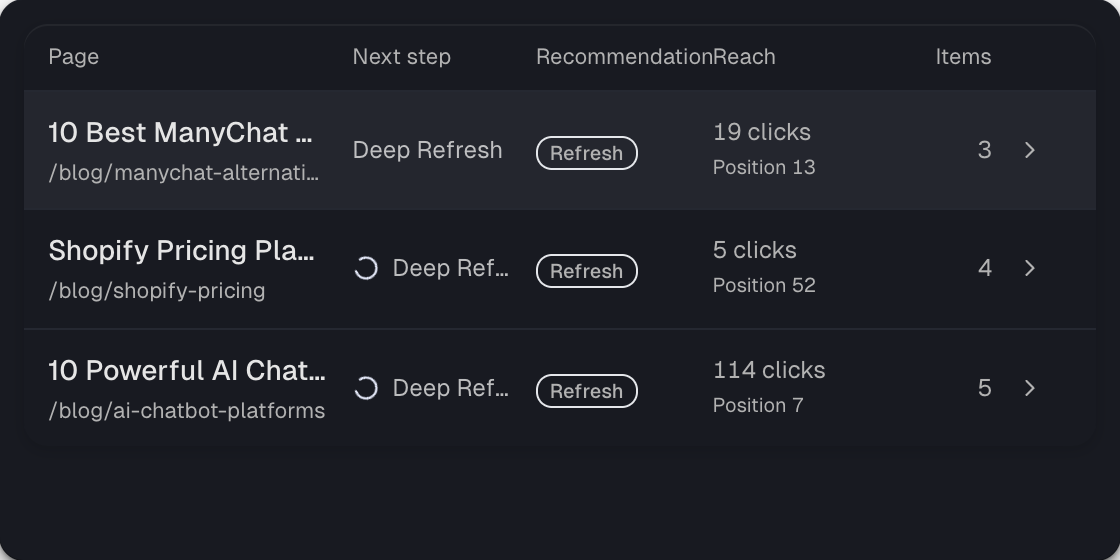


The audit picks the page worth refreshing.
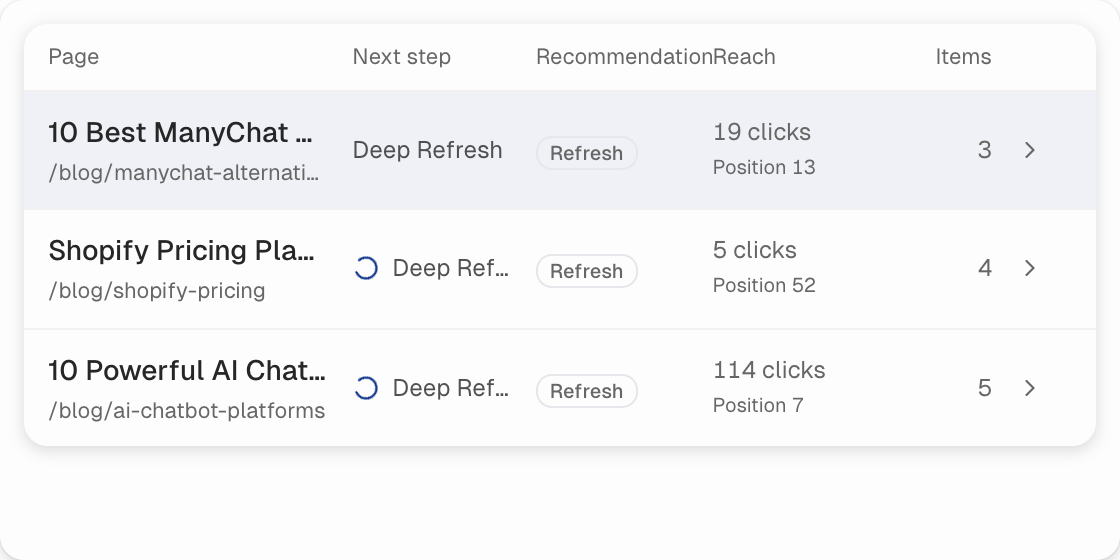
The audit reads every page and names the ones worth the effort, so a refresh starts on the right page.
Explore the content auditGrowing startups around the world











 Featurebase
 Other tools hand you a checklist. RankUp hands you the changes.
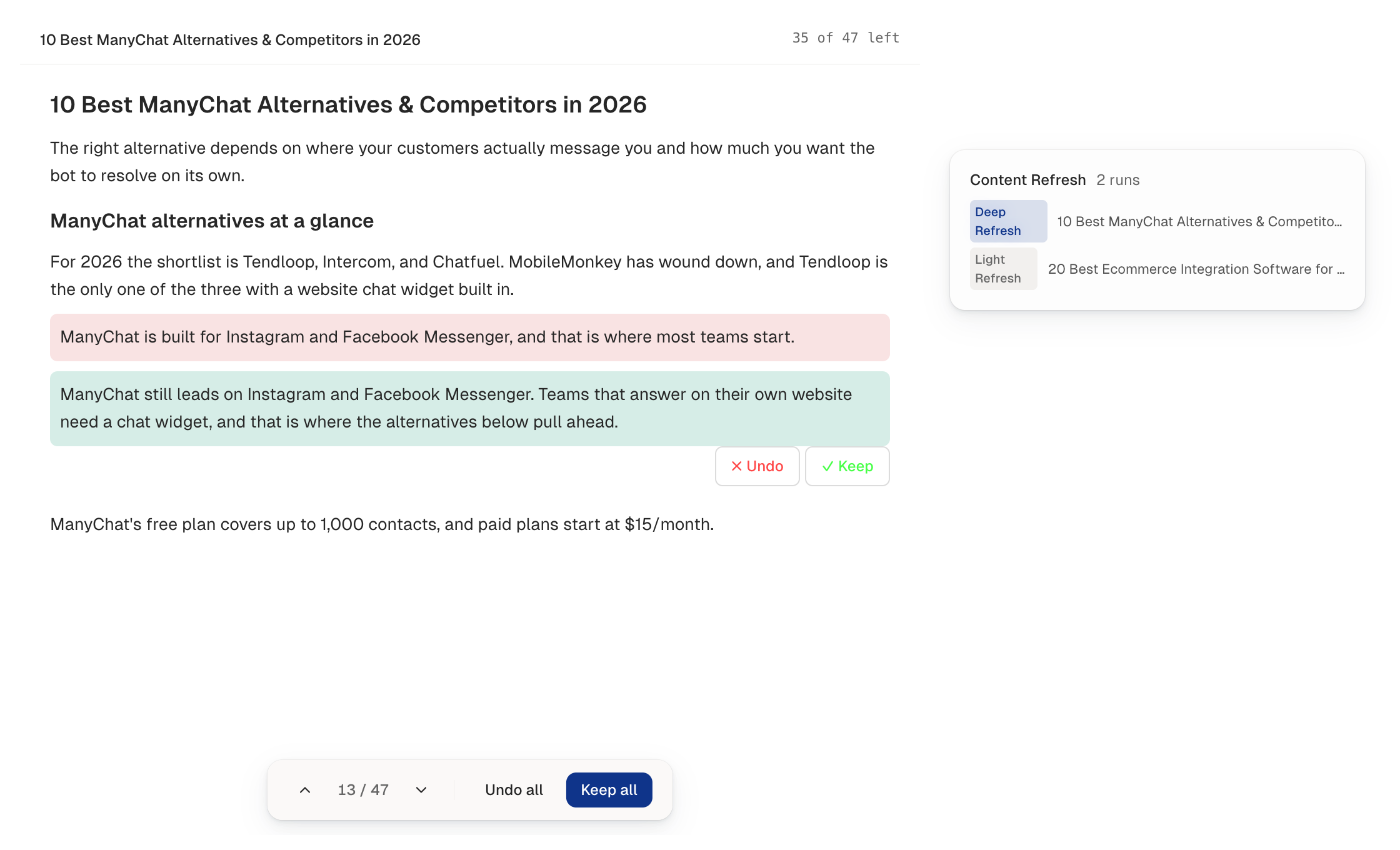
Pick any page on your site, usually one your audit already flagged as worth fixing, and choose how deep to go. RankUp starts from what you've already written and keeps what still works.
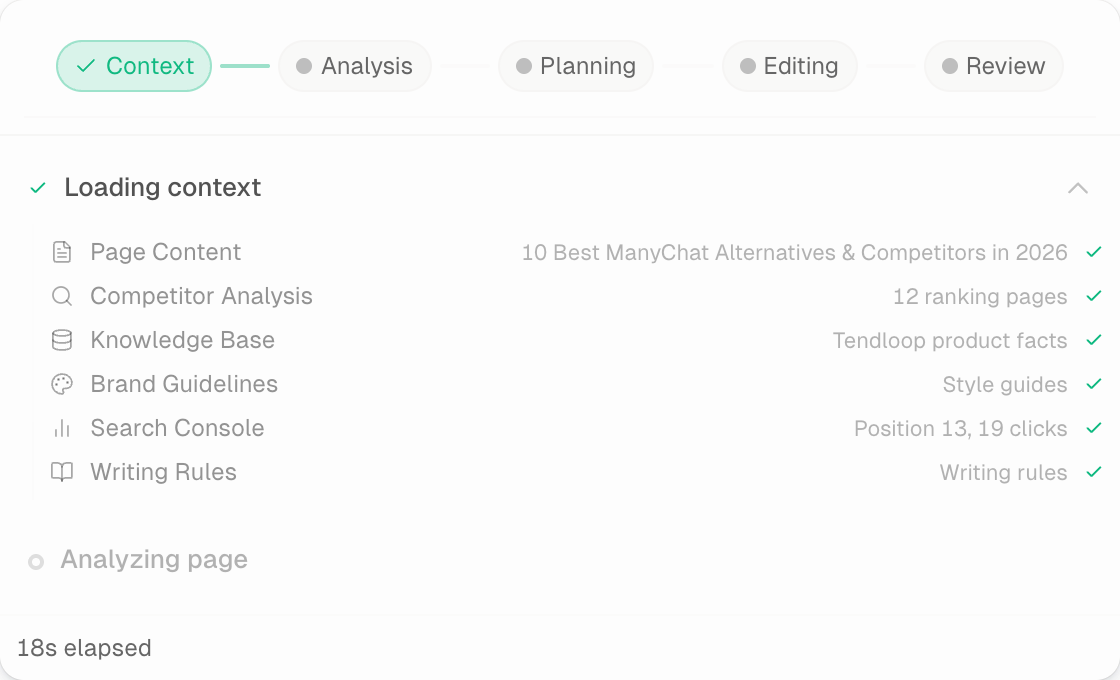
Before it writes, it reads the AI Overview your page is competing for, what readers did after they landed, and where you sit against the pages beating you.
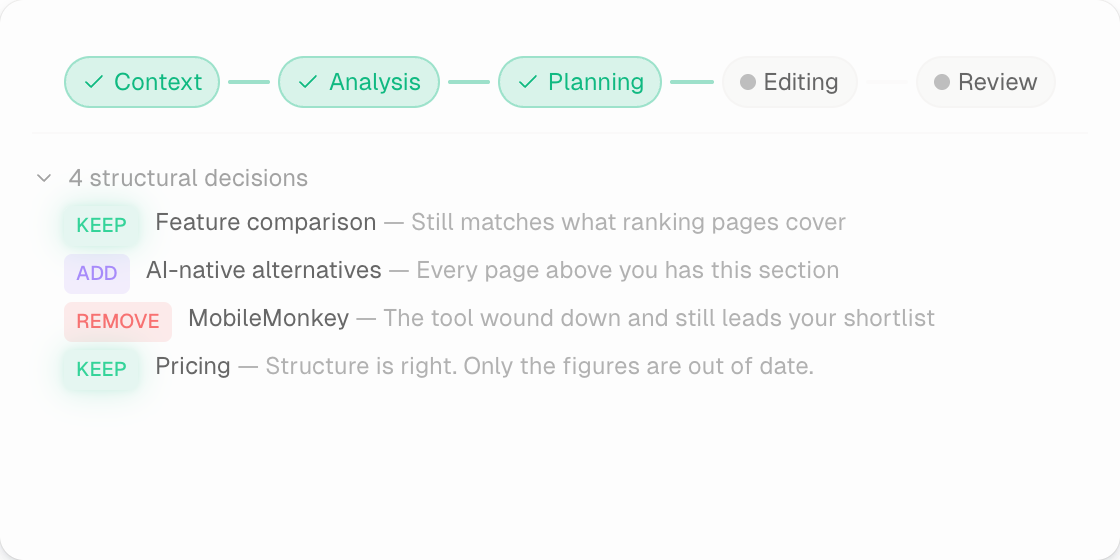
It finds where the page is weak, what competitors cover better, and what's out of date, then plans and makes the edits across the whole page, in your brand voice and with your links kept in place.
A second pass catches broken links, empty filler, and changes that read fine alone but don't fit. Weak changes get fixed or dropped before they reach you.
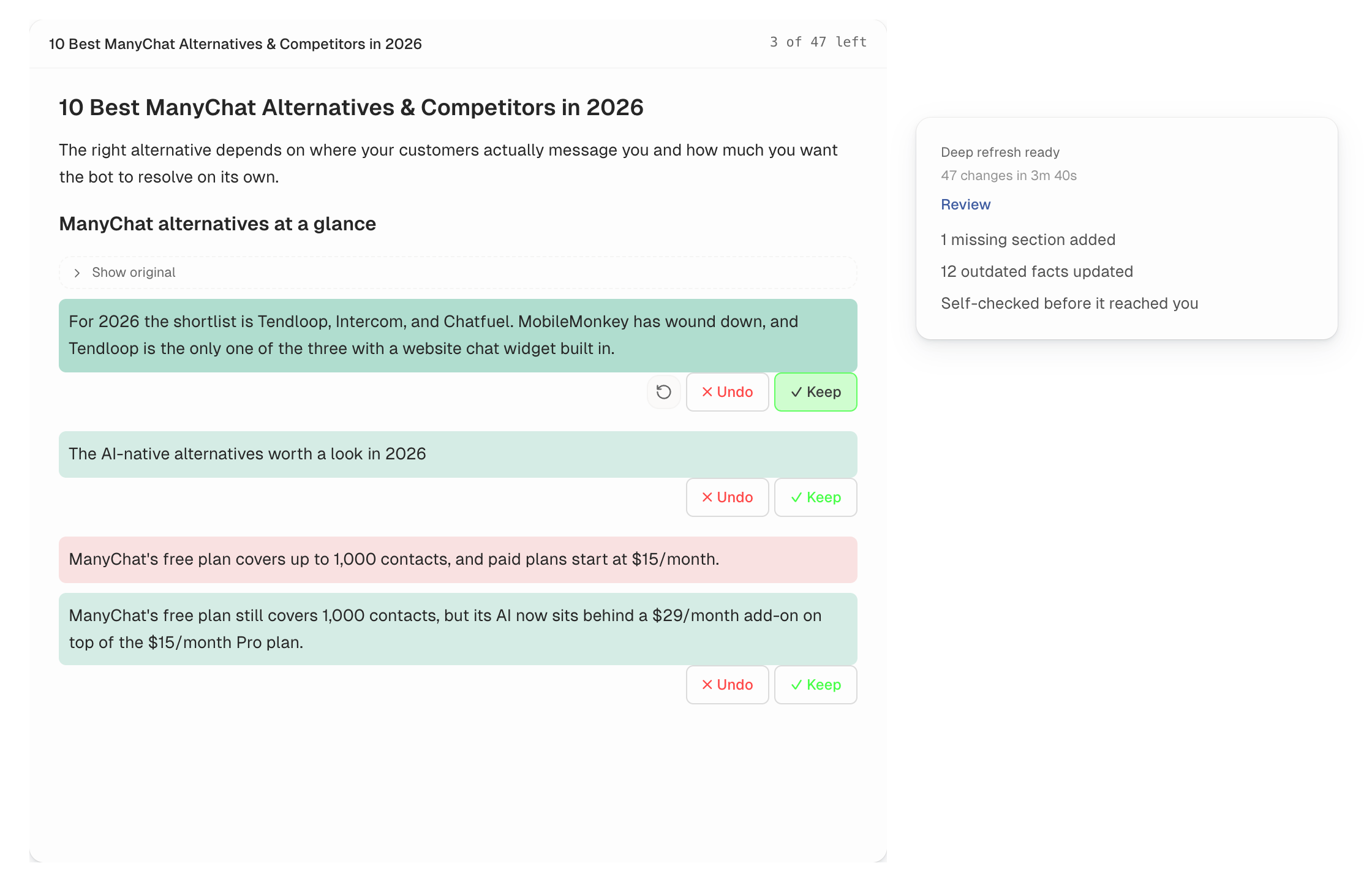
Each refresh comes back as a stack of changes, each with its reason, waiting for your yes or no.
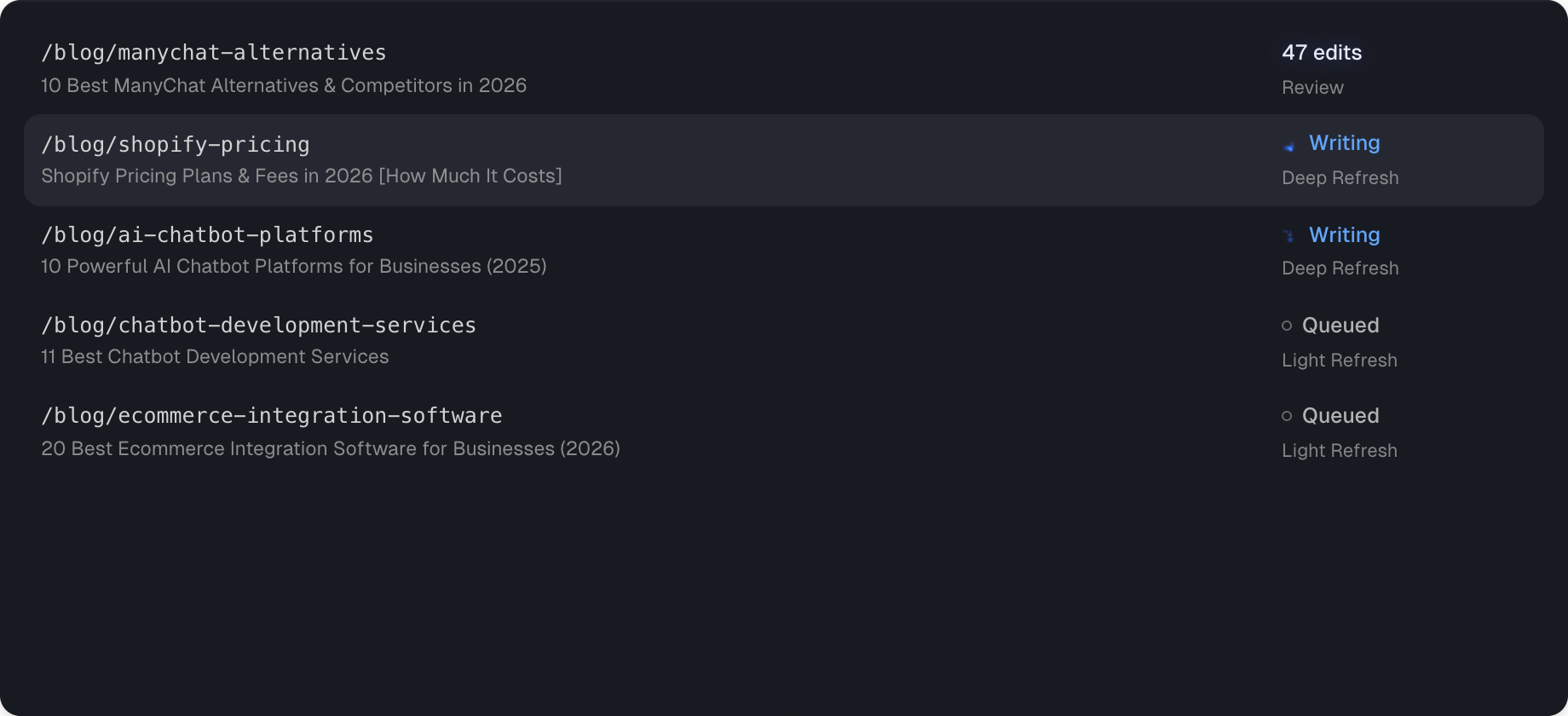
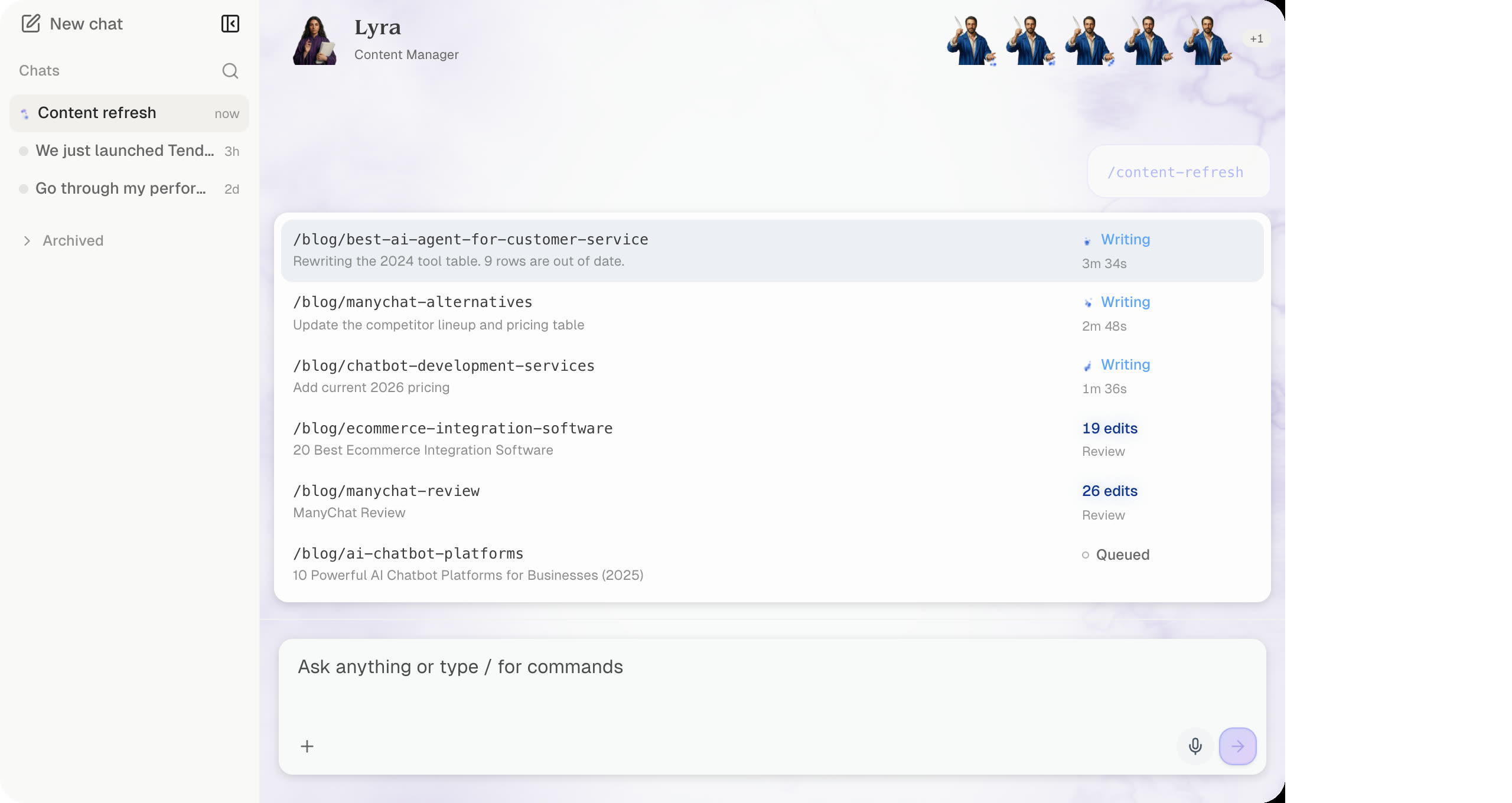
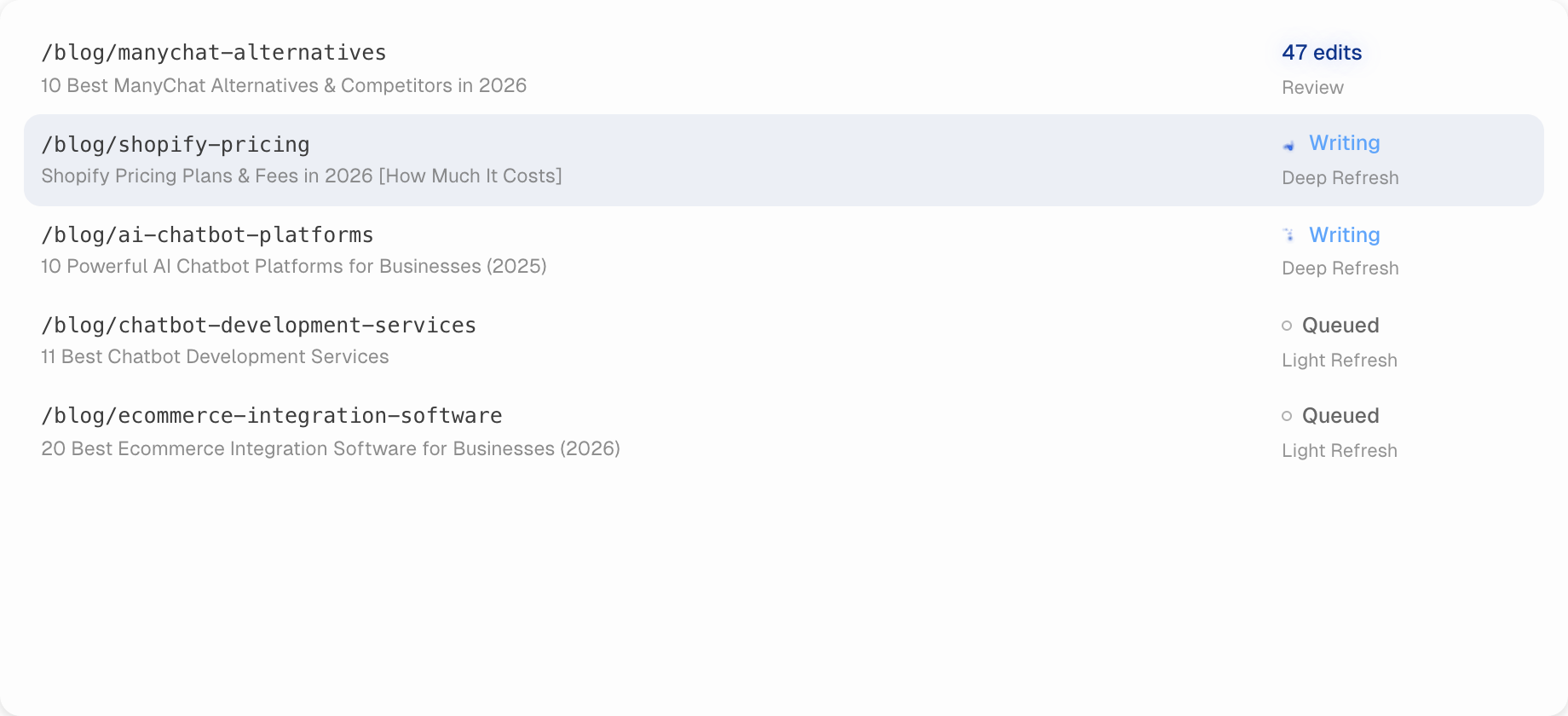
Hand over a stack of pages. The right depth gets chosen for each, the runs happen in the background, and you come back to a queue of refreshed pages.
The audit reads every page and names the ones worth the effort, so a refresh starts on the right page.
Explore the content auditProduct facts, audience, and style guides sit in the knowledge base, so a refresh does not sound like a generic rewrite.
Explore knowledge baseWordPress, Webflow, Sanity, Contentful, Storyblok, and Ghost take the edits, and every published change stays reversible. Site-wide runs still start from one chat.
Meet the content manager See CMS integrations


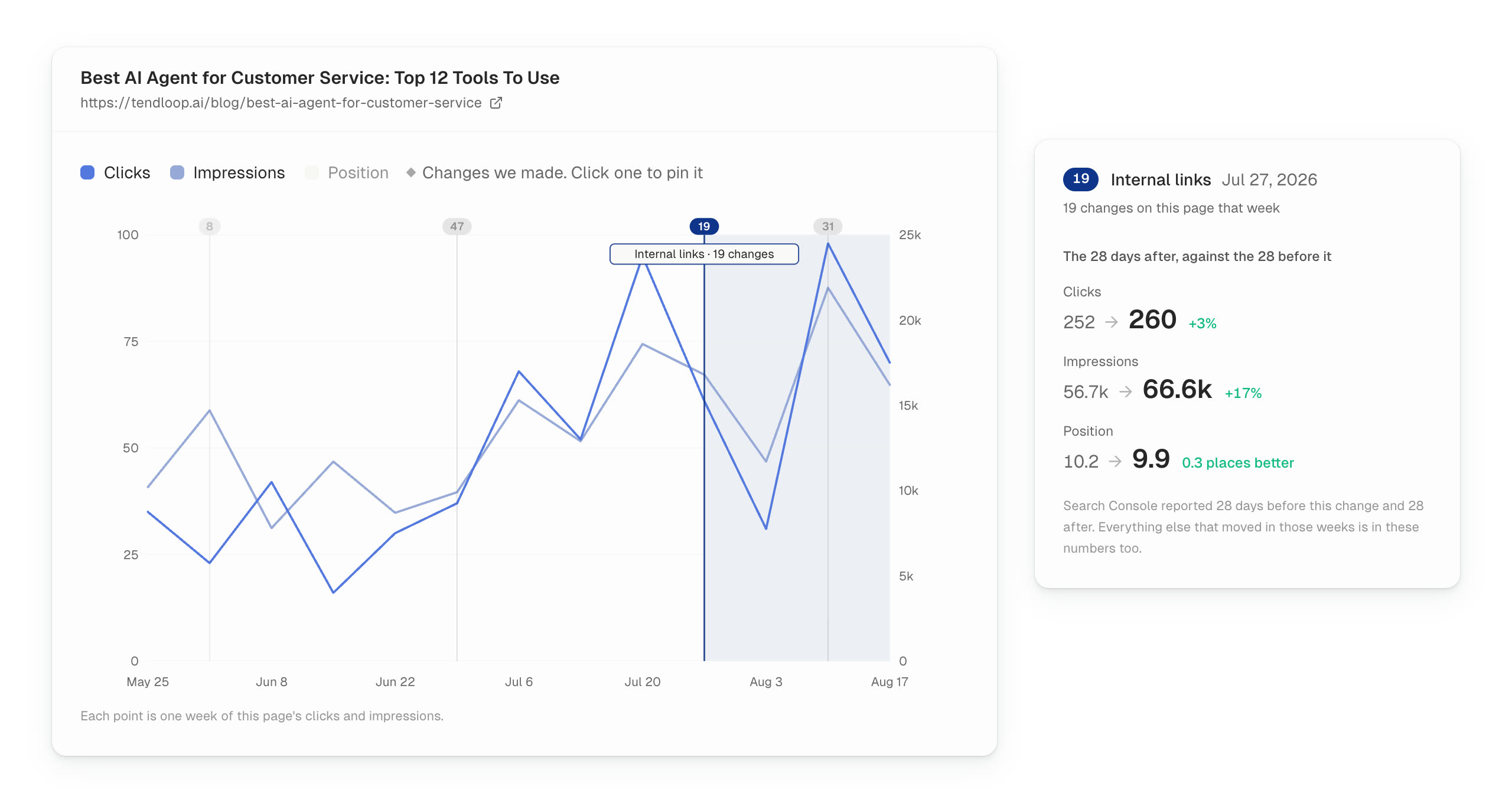
The 28 days after a full refresh, against the 28 days before. Other things moved in those weeks too. The chart does not claim the refresh caused the change.
Enter your domain and we will find the pages losing ground and show what we would refresh first.
Enter your domain to see if you qualify (SaaS and tech companies, English sites only!)