

For SaaS and tech companies with English sites.
:quality(80))
8 StoryChief Alternatives Compared by Workflow, Publishing, and Price
:quality(80)) Georg Richard Aare
Georg Richard Aare For SaaS and tech companies with English sites.
StoryChief combines editorial planning, collaboration, SEO guidance, and multi-channel publishing. A different tool makes sense when your real bottleneck sits elsewhere.
You may need faster social approvals, deeper search research, campaign coordination, enterprise governance, or a system that carries strategy through writing and updates.
This guide compares eight StoryChief alternatives by the workflow gap they close, how much of StoryChief they replace, and the manual work left after setup.
StoryChief alternatives compared: fit, pricing, and trade-offs
These tools replace different parts of StoryChief. Compare the workflow you need covered and the work your team will still own, rather than treating every option as a full replacement.
Tool type | Tools in this comparison | Main evaluation lens |
|---|---|---|
SEO-led content platforms | RankUp, Semrush | Search strategy, content production, publishing depth |
Social-first planners | Planable, ContentStudio, CoSchedule | Social workflow, collaboration, scheduling |
General work management tools | Asana, monday.com, Wrike | Project control, approvals, cross-team coordination |
Why teams look for a StoryChief alternative
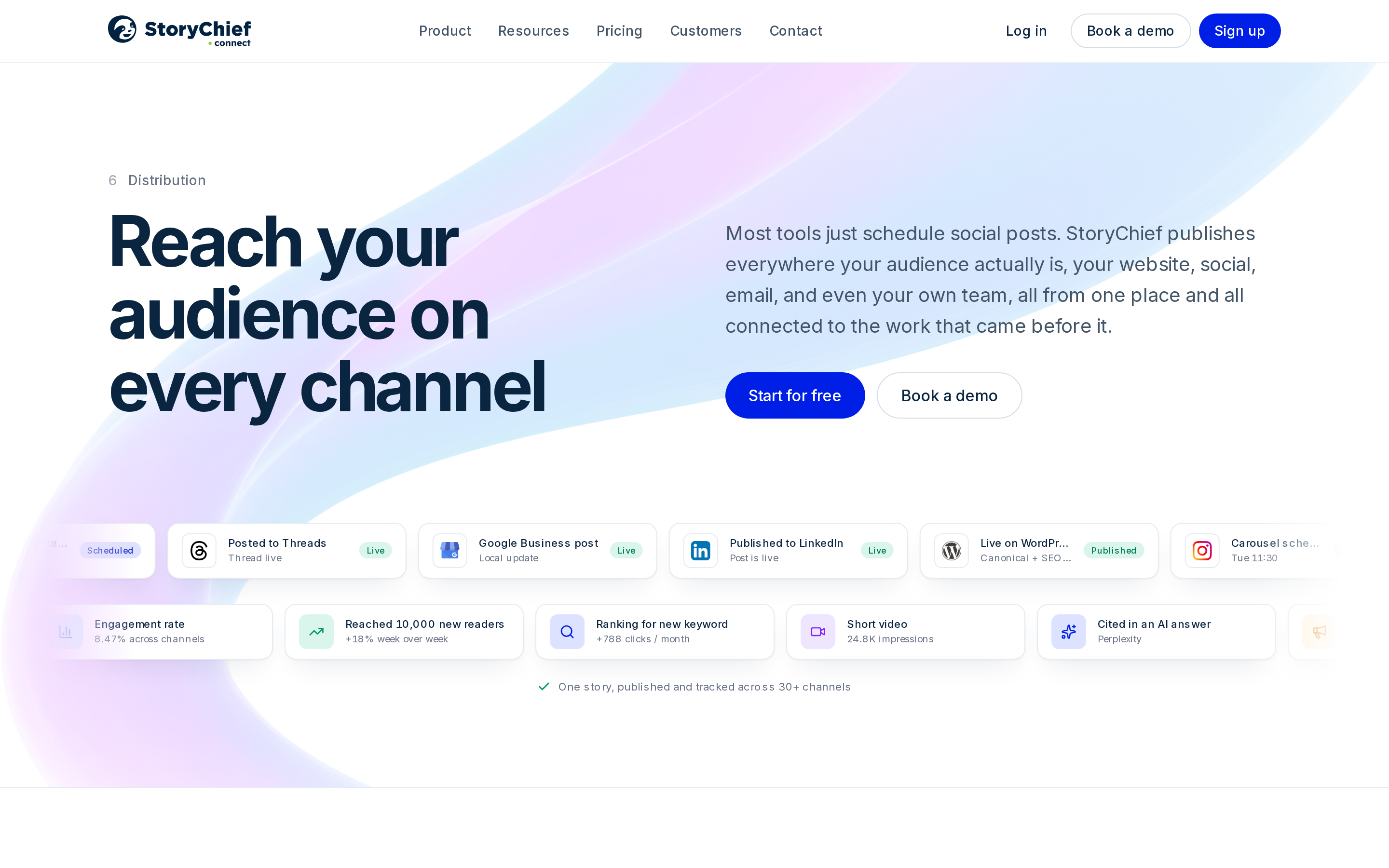
StoryChief covers editorial planning, approvals, social and CMS publishing, SEO insights, and weekly content audits on eligible plans. Teams usually compare alternatives when a different part of the workflow matters more.
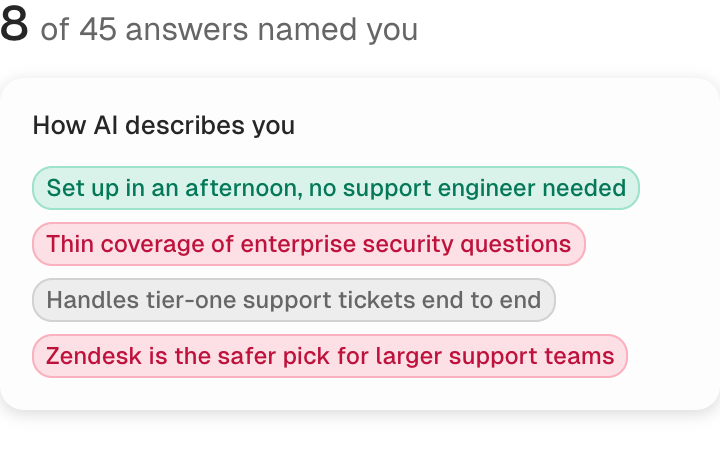
Common decision points include:
Social review depth: Visual previews and multi-level approvals may matter more than article production.
Search execution: Research, briefs, writing, and updates may need to happen in one connected process.
Operational control: Capacity planning, portfolio reporting, or regulated-workflow controls may be the priority.
Plan limits: Included users, social channels, websites, articles, and API access vary by StoryChief plan.
StoryChief also lists over 450 integrations. That integration catalog is different from the channels, websites, and monthly allowances included in a specific subscription.
How we chose these StoryChief replacements
We checked each option against six practical criteria:
Replacement scope: Full content workflow, focused publishing or SEO alternative, or partial coordination replacement.
Collaboration: Editing, feedback, approvals, and client review.
Publishing: Native social and CMS destinations, plus plan limits.
Search execution: Research, briefs, optimization, audits, and implementation.
Pricing model: Per user, workspace, customer, or usage-based plan.
Manual work remaining: What your team still has to research, write, move, or publish.
Feature availability and public prices were checked against official product and pricing pages. Work-management tools were evaluated as partial replacements because they coordinate content without natively replacing StoryChief's publishing workflow.
1. RankUp
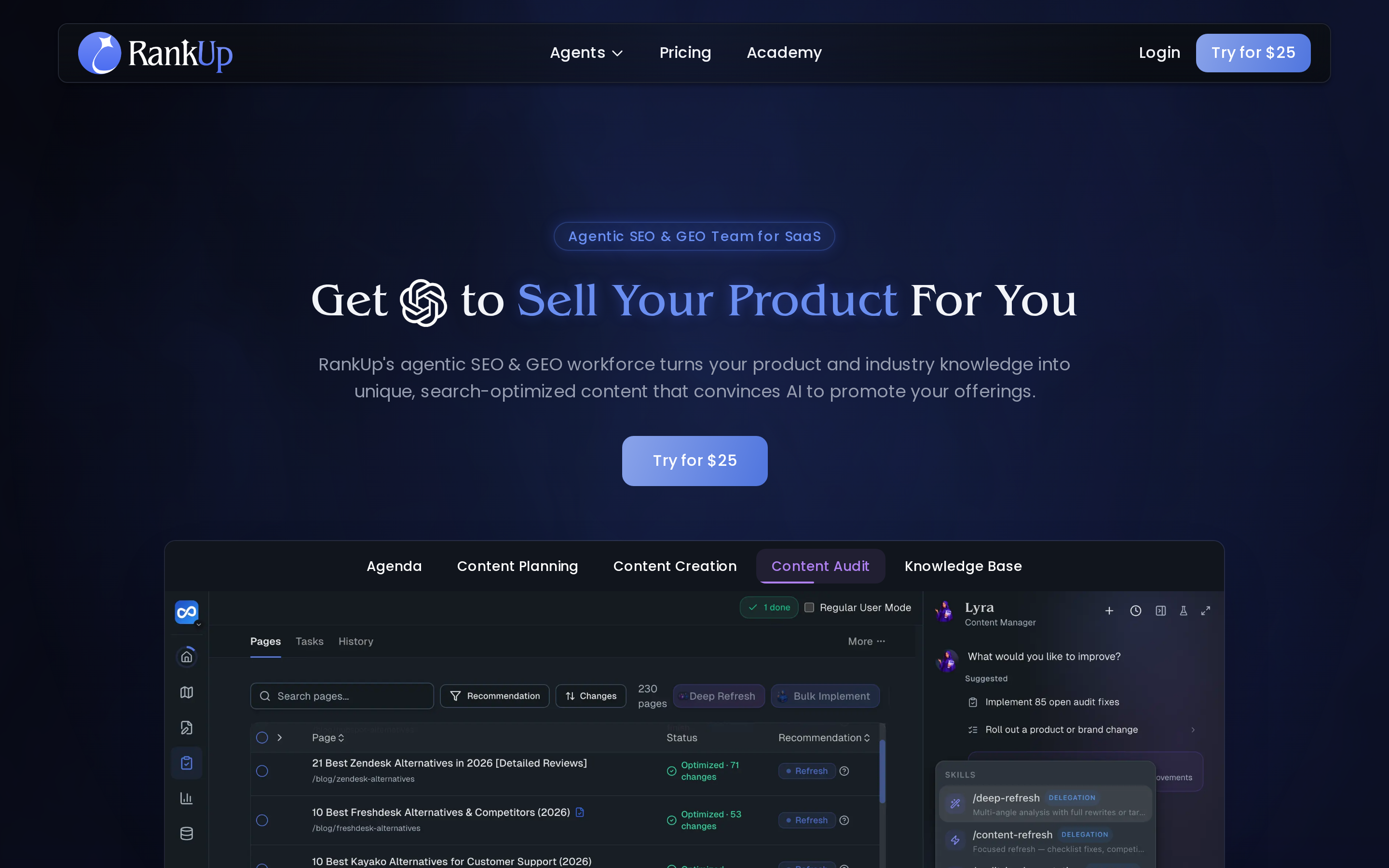
RankUp is an SEO and GEO content team for SaaS founders and lean marketers who want finished content and ongoing improvements, rather than briefs for a writer to execute. It turns keyword and competitor research into a prioritized plan, publish-ready articles and pages, and reviewable updates that help buyers find and evaluate the product in Google and AI search.
StoryChief spreads content creation and publishing across many channels. RankUp puts its depth in one place, the search and AI visibility work behind each article.
Persistent context is what holds that together. Your brand guidance, product knowledge, and earlier interview answers stay loaded from planning through writing and updates, so no stage starts from scratch.
Capability | RankUp | StoryChief |
|---|---|---|
SEO workflow | Specialized agents run research, blueprints, writing, and audits | Real-time editor scoring and publishing workflow |
Direct publishing | WordPress, Webflow, Contentful, Sanity, Storyblok, Ghost, WooCommerce, with two-way sync | 11 social channels and 13 CMS platforms |
Social planning | Not a social publishing tool | Multi-channel distribution hub |
Where RankUp fits best
RankUp fits a lean SaaS team that wants the search work completed, not just organized. Research, structure, drafting, and updates all run on the same stored business context.
The workflow breaks down like this:
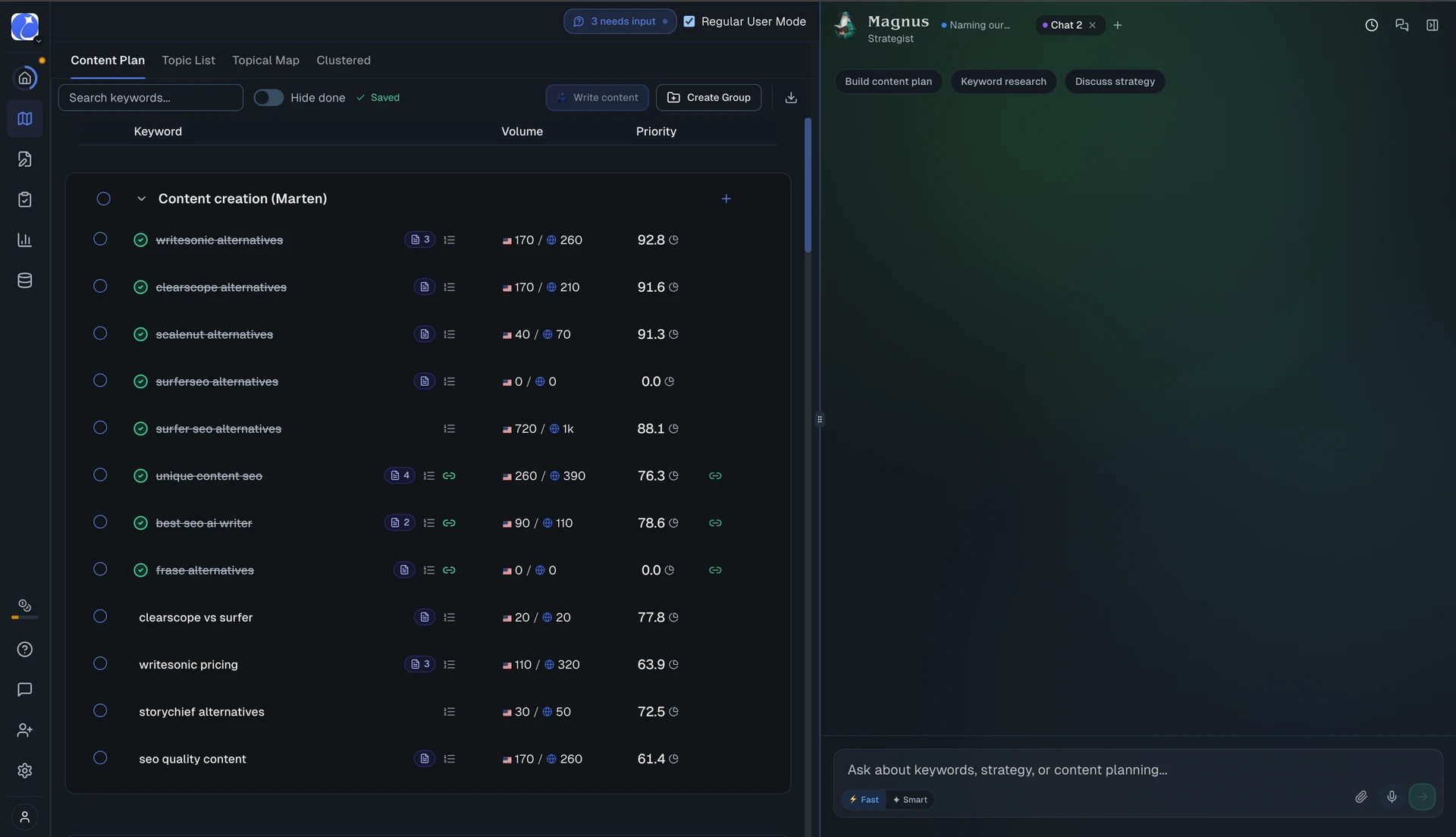
Strategy first - keyword research becomes a prioritized content plan with clusters and coverage gaps mapped, handled by Magnus, so you always know what to publish next and why.
Publish-ready articles - Cedric combines live SERP research with your product knowledge, asks focused questions where expertise is missing, and writes the finished article in your brand voice with internal links included.
Reviewable fixes - audit findings become written content updates and internal-linking changes with the rationale attached. Review or revise the changes; approve, then RankUp applies it to your CMS.
Ongoing management - live pages get tracked for slipping rankings and stale sections, and Lyra coordinates the updates across the site.
The system can carry a topic from research to a publish-ready draft, pausing when your expertise would materially improve the article.
After a page update, RankUp evaluates impressions first, then clicks and average position over time to judge how the change performs.
The deciding question is what happens after the plan. RankUp is built for teams that want the article and later improvements produced for review, not another task list to implement.
Where StoryChief still wins
On the publishing side, StoryChief brings more:
Publishing breadth: Its integration catalog covers CMS platforms, social channels, RSS, and newsletters, with included destinations varying by plan.
API access: Agency Editorial includes REST API access for programmatic workflows.
Social planning: StoryChief runs a visual distribution hub across its social channels. RankUp publishes and schedules into seven CMS platforms only.
That breadth matters when one approved piece has to reach several channels at once. It does not produce the strategy, the article, or the updates that follow.
Pricing and fit
RankUp's public entry offer:
Before the trial, RankUp learns your business context, analyzes your site and situation, and runs a light AI-search audit to identify relevant topics, baseline findings, and next actions.
RankUp then proposes a custom ongoing plan tailored to your needs, rather than asking you to choose from one-size-fits-all packages. The 7-day trial follows for content creation and content refreshes.
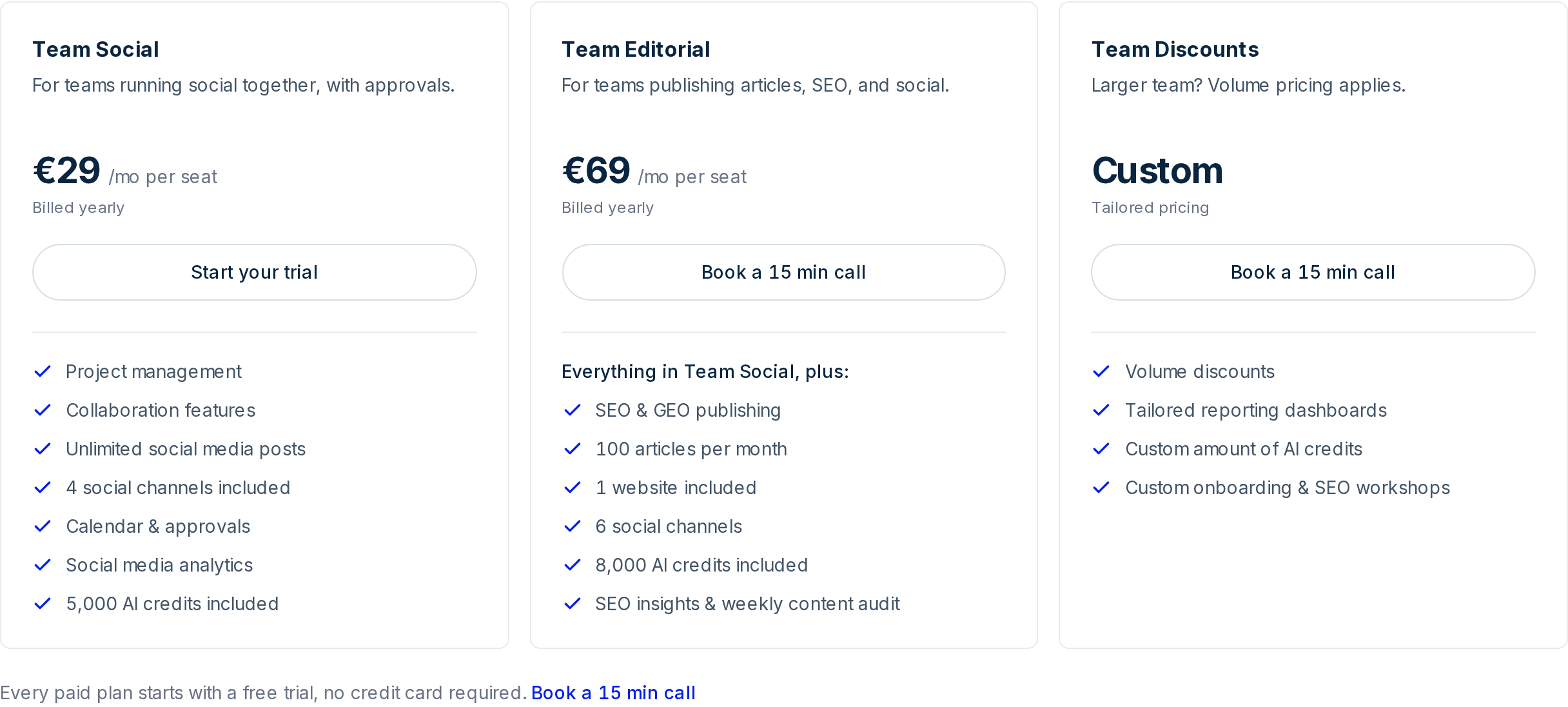
StoryChief's pricing page lists these annual-billing rates in USD:
Free: $0 for social, website, and SEO analytics.
Social Media Calendar: $22 per month for one user, three social channels, and 60 posts.
Team Social: $34 per seat monthly, with four included social channels and unlimited social posts.
Team Editorial: $81 per seat monthly, with one website, six social channels, 100 articles, SEO insights, and weekly audits.
Agency Social: $58 per customer monthly. Agency Editorial: $93 per customer monthly and includes API access.
Paid plans include a no-card trial, but the current pricing page does not state a duration.
The fit question is simple. RankUp suits a lean team that needs strategy, production, and content updates handled, rather than more seats to coordinate.
Bottom line
Pick based on which side of the handoff hurts. If nobody on your team has the hours or the SEO expertise to produce the content, RankUp covers that end.
If the content already exists and getting it out across channels is the harder part, StoryChief keeps that advantage.
2. Planable
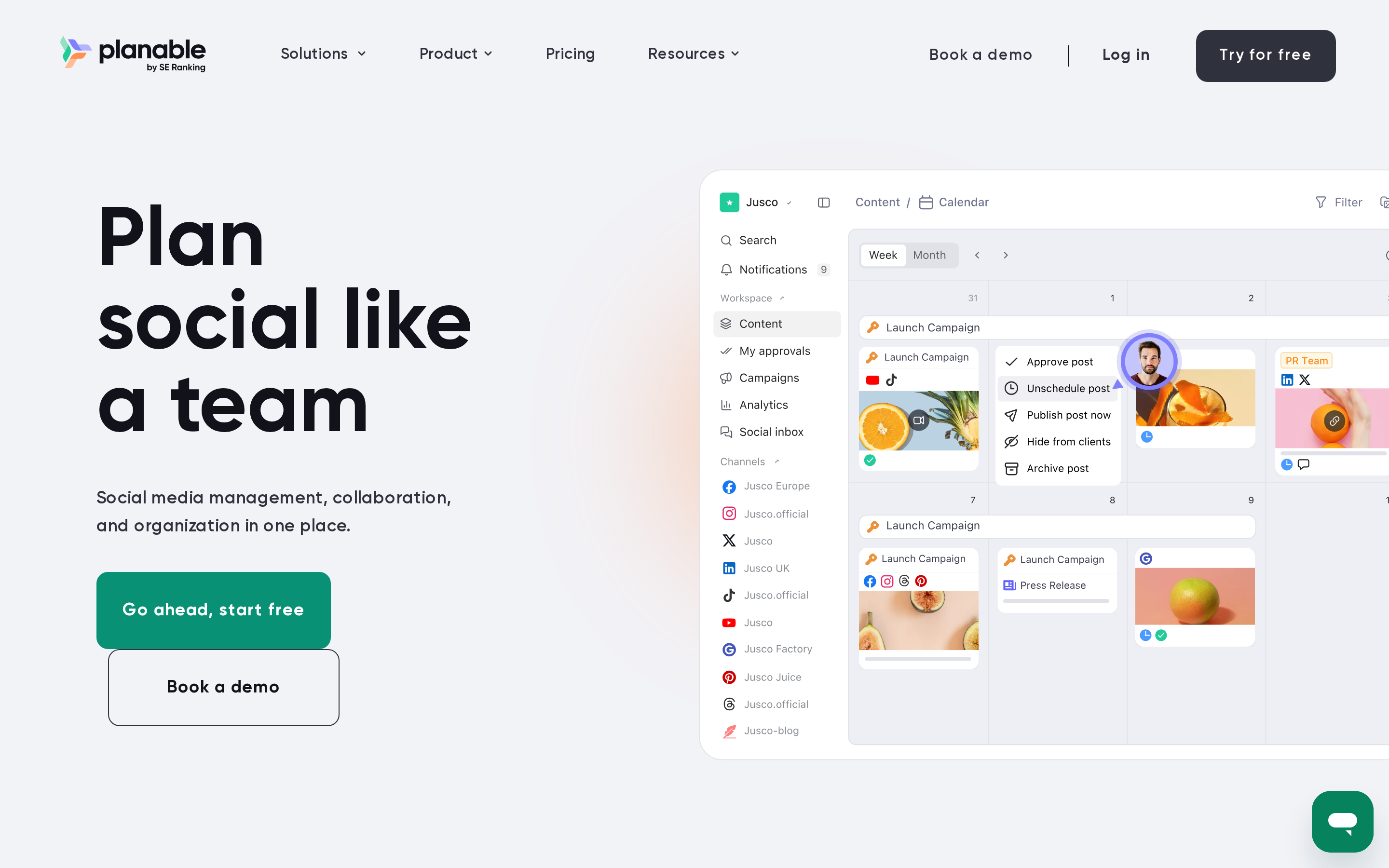
Planable is a social collaboration and approval tool. Content lives in workspaces, and scheduling runs across the major social networks from a shared calendar.
Better than StoryChief when…
Planable earns its place on visual planning and approvals. Its planning views and feed preview show reviewers how a post will appear before it goes live.
Rescheduling happens by dragging a post across the calendar instead of clicking through menus, and there's a dedicated Instagram-style grid for visual accounts.
Approval options depend on the plan:
Basic: None and Optional approvals.
Pro: Adds Required approval before publishing.
Enterprise: Adds Multi-level approval for sequential team, client, or legal sign-off.
After approval, Planable can schedule supported social posts. The workspace structure suits brands and agencies managing visual review cycles.
Where StoryChief still wins
Planable's current product and pricing pages center on social publishing and universal content planning, not native CMS publication.
StoryChief is the safer fit when an approved article must move directly into a connected CMS. Planable can still coordinate non-social content, but the publishing handoff remains outside its core workflow.
Pricing and fit
Planable bills per workspace. Entry pricing starts at $33 per workspace per month billed annually, and the price moves with the number of users and workspaces you add.
Pro is listed at $49 per workspace per month. The trial allows scheduling up to 50 posts in total.
Here's how that lines up against StoryChief's social plans:
Planable Basic: $33 per workspace monthly on annual billing, with 60 posts, four social pages, and unlimited users.
Planable Pro: $49 per workspace monthly, with 150 posts, ten social pages, and Required approvals.
Enterprise: Custom pricing, unlimited posts, and Multi-level approvals.
The first 50 posts are free with no time limit.
Workspace pricing works for a brand with several reviewers, since they share one workspace. It becomes pricier across many clients because each client needs a separate workspace.
Bottom line
Planable is the better social approval room, especially when feed, calendar, and grid views shape review. StoryChief is the broader editorial choice when those approvals must lead directly to CMS publishing.
3. ContentStudio
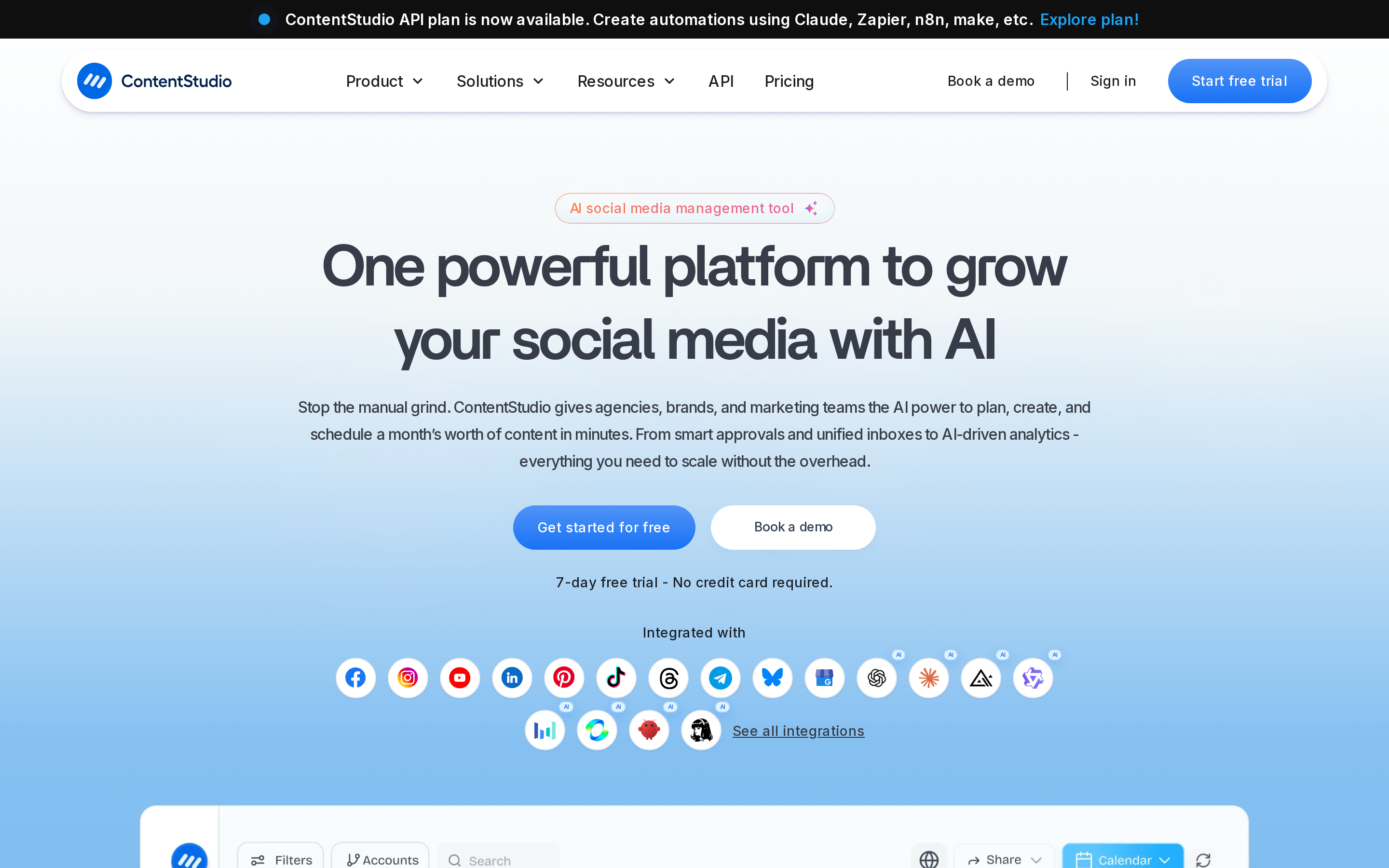
ContentStudio is a social media management platform for discovery, scheduling, automation, analytics, and engagement. Its current plans focus on social accounts rather than native editorial CMS publishing.
Replacement scope: ContentStudio can replace StoryChief's social discovery, scheduling, inbox, and automation work. It does not replace StoryChief's current SEO, audit, and CMS-centered editorial workflow.
Better than StoryChief when…
ContentStudio stands out when the calendar needs a steady supply of social material and automated posting.
Discovery: Topic feeds help teams monitor and save relevant material.
RSS autoposting: Available on Advanced, it can send selected feeds into a publishing queue.
Social inbox: Advanced combines comments and messages for supported accounts.
Analytics and listening: Competitor analytics is included on Advanced, while social listening is a paid add-on.
This is a social-content loop, not a replacement for long-form search production.
Where StoryChief still wins
StoryChief is the better match when articles, SEO guidance, audits, approvals, and CMS delivery need to stay connected.
ContentStudio's current plans emphasize social scheduling and engagement. They do not provide StoryChief's article-centered publishing workflow, and RSS autoposting, collaboration, approvals, and the inbox begin on Advanced.
Pricing and fit
ContentStudio's annual pricing starts at $19 per month for Standard and $49 for Advanced.
Standard - $19 per month
Advanced - $49 per month
That makes it one of the cheaper options on this list, but the value depends on whether you will actually use the discovery and RSS loop.
Advanced is the relevant comparison when you need RSS autoposting, collaboration, approvals, competitor analytics, or the social inbox.
Bottom line
ContentStudio fits a social team that wants discovery, RSS automation, scheduling, and engagement together. StoryChief fits an editorial team that also needs article production, SEO guidance, audits, and CMS delivery.
Set beside Planable, the split is discovery and RSS autoposting on one side, native-style feed previews on the other.
4. CoSchedule
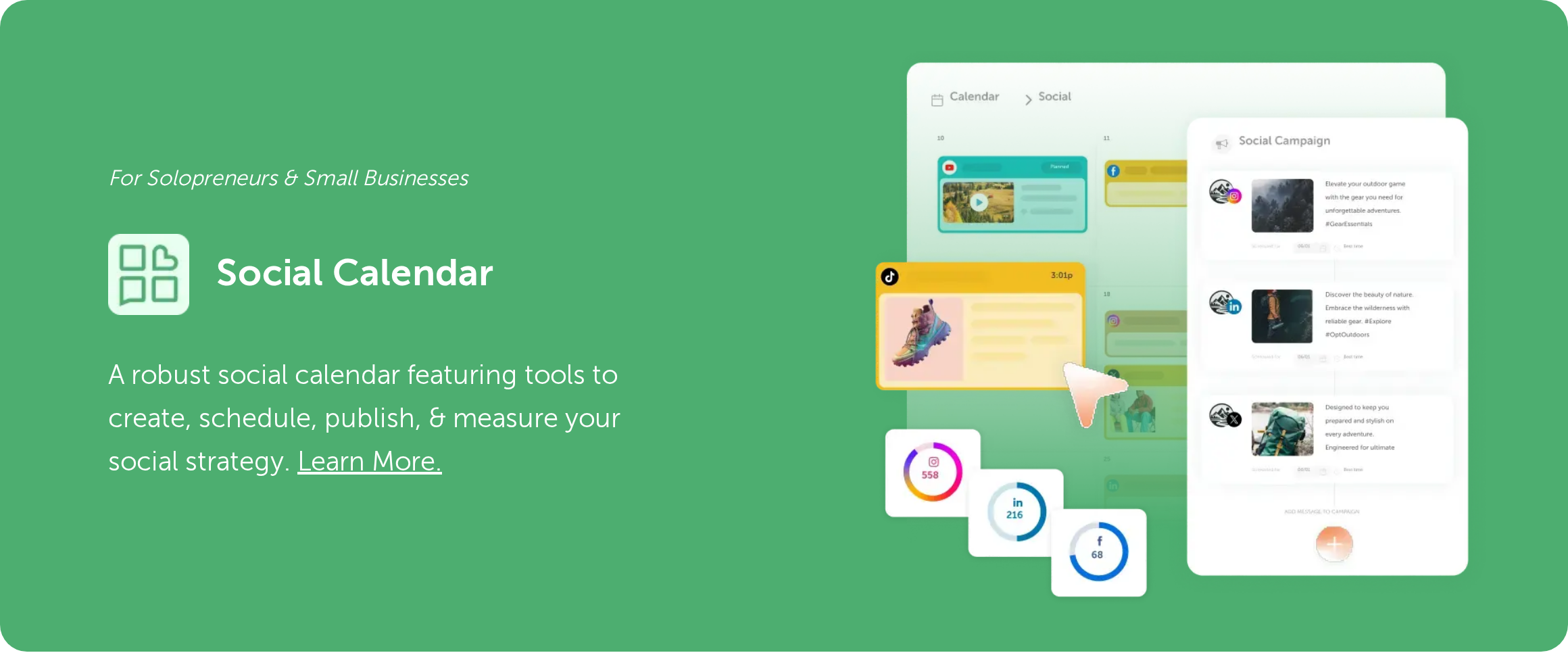
CoSchedule is a marketing calendar for teams whose launches have many moving parts. The calendar pulls campaign scheduling, social publishing, and project tasks into one view.
Better than StoryChief when…
CoSchedule keeps planning and publishing in the same environment, so a scheduled post and the work behind it share one calendar.
What that covers:
Coordination: Content Calendar and Marketing Suite add campaign timelines, custom project types, Kanban dashboards, and broader work views.
Content support: CoSchedule includes planning and AI-assisted creation features, while its core pricing comparison centers on calendars, projects, and social publishing.
Social networks - Facebook, Instagram, X, LinkedIn, YouTube Shorts, TikTok and Pinterest.
Additional destinations - Google Business Profile, Mastodon and Bluesky.
That shape fits a team coordinating campaigns, channels and owners rather than a single editorial pipeline.
Where StoryChief still wins
StoryChief starts with the article, pairing editorial work and distribution with SEO guidance and audits. CoSchedule starts with the calendar, so campaign work takes center stage.
CoSchedule does cover content planning and team allocation. StoryChief keeps its tools closer to article production and distribution.
Article workflow - StoryChief pairs editorial publishing with strategy and content-audit tools.
Distribution focus - StoryChief puts article creation and distribution at the center, while CoSchedule centers campaign coordination.
Pricing and fit
CoSchedule sells separate calendar products rather than one upgrade ladder.
Social Calendar starts at $19/user/month, while Agency Calendar starts at $59/user/month. Content Calendar and Marketing Suite require a quote.
Free Calendar: $0 for one user.
Social Calendar: $19 per user monthly on annual billing.
Agency Calendar: $59 per user monthly on annual billing.
Content Calendar: Contact sales; supports up to five users.
Marketing Suite: Contact sales with custom user limits.
The practical consequence is that you choose a product family before you choose a plan size. Per-user pricing on the agency tier means cost tracks headcount rather than publishing volume, which adds up when many people need calendar access but only a few write.
Bottom line
CoSchedule is the better partial replacement when a campaign calendar, Kanban dashboard, and social schedule need to share one view. StoryChief remains stronger for article publishing, SEO guidance, and content audits.
5. Asana
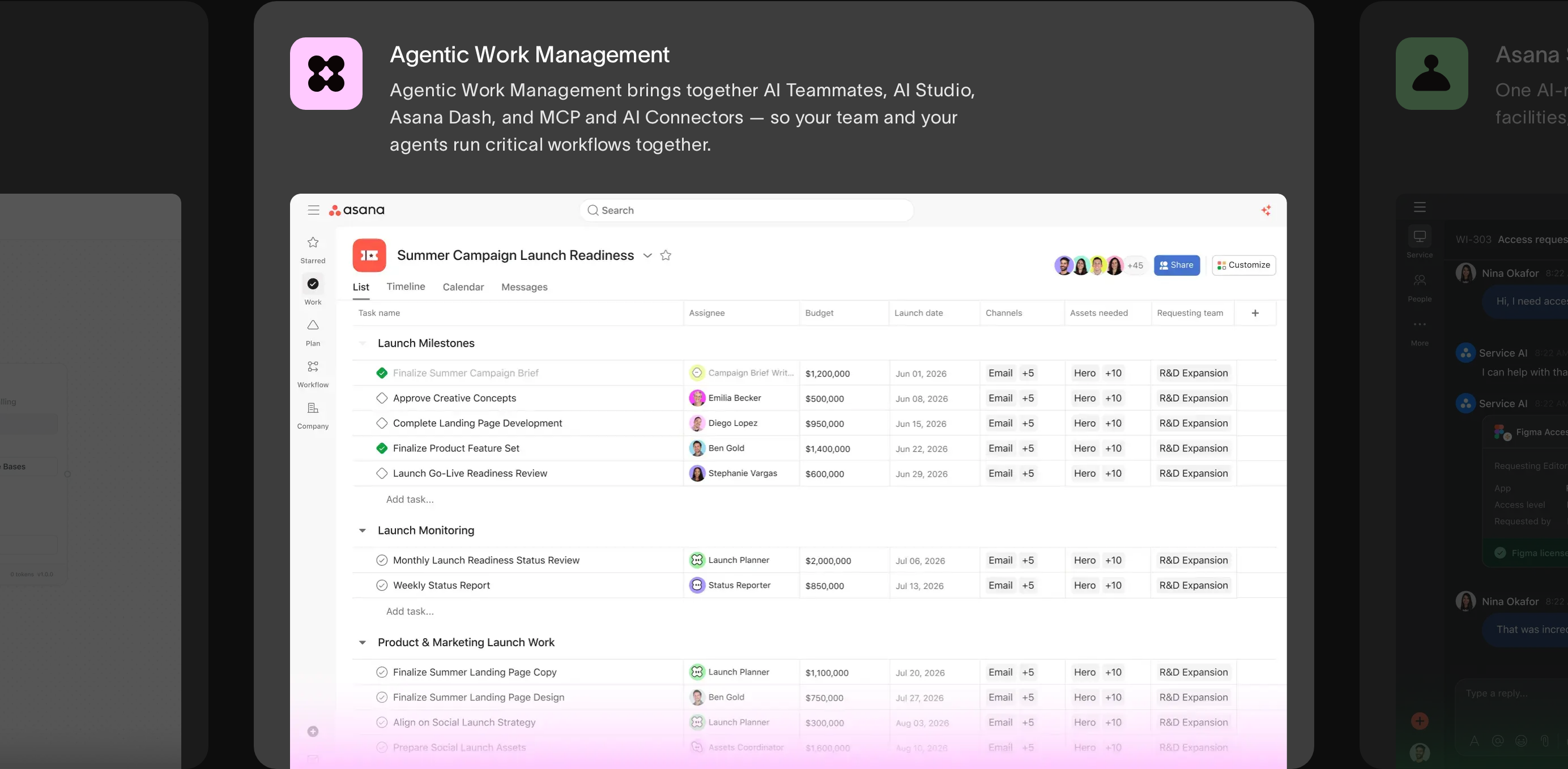
Asana is a generalist work management platform where content is one workstream among many. Marketing tasks, approvals, and team capacity sit next to whatever else the company is shipping.
Better than StoryChief when…
Asana pulls ahead when content is one workstream inside a wider marketing operation.
Starter: Campaign templates, forms, dashboards, and automations support repeatable launch work.
Advanced: Adds portfolios, workload, approvals, and proofing for work across departments.
Enterprise: Adds universal workload and capacity planning for organization-wide resource decisions.
This fits teams that need content deadlines beside product launches, events, and other departments' work.
Where StoryChief still wins
Asana coordinates the work but does not natively publish finished content to a CMS or social network.
Publishing: Teams can build an integration, but delivery is not a native Asana content workflow.
SEO: Keyword research, briefs, on-page guidance, and content audits require other tools.
StoryChief keeps editorial planning and publishing in the same workspace.
Pricing and fit
Asana's Personal plan is free for up to two users, with unlimited tasks and projects plus list, board, and calendar views.
Paid annual pricing starts at $10.99 per user monthly for Starter and $24.99 for Advanced. Asana places portfolio workload, approvals, and proofing on Advanced, while universal workload and capacity planning require Enterprise.
Personal: $0 for up to two users.
Starter: $10.99 per user monthly, billed annually.
Advanced: $24.99 per user monthly, billed annually.
Enterprise: Contact sales; adds universal workload and capacity planning.
Bottom line
Asana replaces StoryChief's coordination layer, not its publishing layer. It offers deeper cross-team task, approval, workload, and portfolio management, but most content teams will still need separate SEO and publishing tools.
6. monday.com
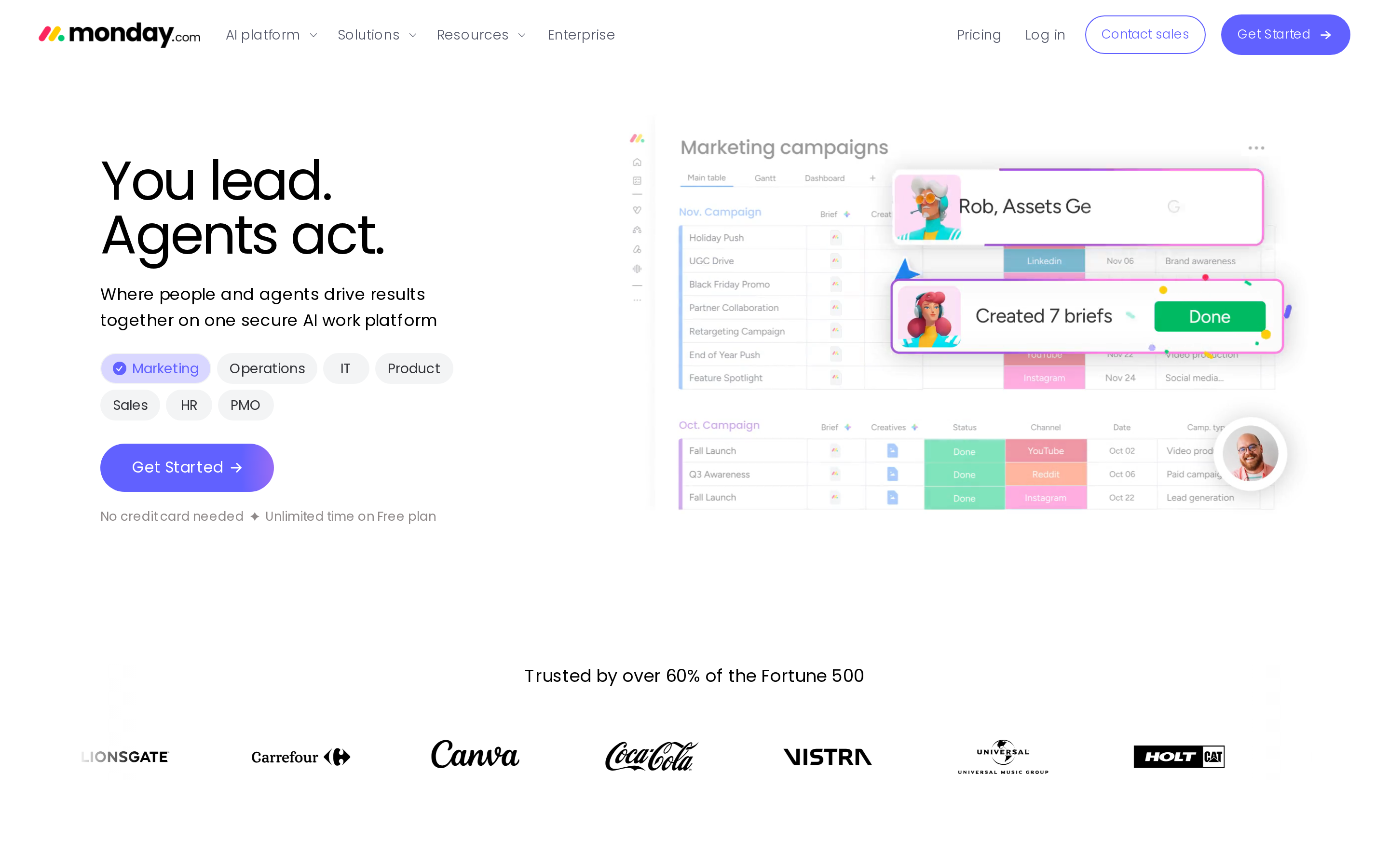
monday.com is a configurable work OS. You build the marketing workflow yourself out of boards, automations and dashboards instead of adopting one that ships ready-made.
Building your own workflow is why teams connect monday.com to other systems. Enterprise supports up to 250,000 automation and integration actions per month.
Where the work happens - custom boards, views and dashboards, with automations connecting marketing tasks to whatever else the company runs in monday.com.
What needs another tool: SEO scoring, keyword research, and native content publishing sit outside monday.com's core work-management product.
Better than StoryChief when…
The gap monday.com closes is operational: who is working on what, at what capacity, across the whole marketing portfolio.
Resource allocation boards - assign people to work and see where the load already sits before committing to a calendar.
Workload views - spot the person carrying three launches while someone else has room.
Real-time portfolio oversight - dashboards that roll individual boards up into one view of everything in flight.
The buying reason is structural: you want one place where marketing, ops and product processes share the same boards and the same status language.
Where StoryChief still wins
The trade-off appears at the end of the content process. monday.com can schedule, assign, and track a calendar, but it is not a native article-production or publishing platform.
StoryChief keeps CMS and social delivery beside its editorial tools. monday.com relies on separate products or integrations for publishing, keyword research, and on-page guidance.
Pricing and fit
Pricing is seat-based. Basic starts at $9 per seat per month and Standard at $12 per seat per month on annual billing, with automation volume and deeper dashboards opening up on higher tiers.
The consequence is that cost tracks headcount, not published articles. A five-person marketing team pays for the work OS whether or not the content workflow actually gets faster.
Basic: $9 per seat monthly on annual billing.
Standard: $12 per seat monthly and includes 250 automation actions plus 250 integration actions each month.
Pro: $19 per seat monthly with 25,000 actions in each category.
Cost follows headcount, not publishing volume.
Bottom line
monday.com replaces the operations layer of content work: planning, capacity and cross-team coordination on boards you configure yourself. Publishing and SEO are left to other tools.
It is a coordination system rather than a content production system, and the rest of the stack has to cover the difference.
7. Wrike
Wrike is an enterprise work management platform with structured workflows, resource planning, and advanced governance controls.
Replacement scope: Wrike can replace StoryChief's project control, resource planning, and governance layer. It does not natively replace StoryChief's editorial publishing and SEO workflow.
Better than StoryChief when…
Wrike becomes relevant when enterprise resource control and governed review matter more than content-native publishing.
Capacity: Business includes resource and capacity planning. Pinnacle adds advanced planning and budgeting; older account packaging can differ.
Encryption: Wrike Lock is a paid customer-managed-key add-on. Asana Enterprise+ offers Enterprise Key Management, while monday.com offers BYOK through Guardian, so compare eligibility and implementation.
Compliance controls: Higher tiers add security and governance features. Confirm the required HIPAA, GDPR, SSO, and data-control configuration with Wrike before purchase.
These controls support legal and operational review, but they do not speed up article research or production.
StoryChief is oriented toward SMBs and digital marketing agencies, so the comparison is not really governance against governance. It is content distribution against enterprise oversight.
Where StoryChief still wins
StoryChief is more content-native for editorial production and publishing.
Wrike coordinates reviews and approvals, but CMS delivery needs an integration or manual handoff. StoryChief keeps article, social, RSS, and newsletter destinations inside its integration ecosystem, subject to plan allowances.
Wrike's center of gravity remains enterprise work governance, not a visual social calendar or SEO content workflow.
Pricing and fit
Wrike pricing is $10 per user monthly for Team and $25 per user monthly for Business on annual billing.
Both tiers bill per user, so the total tracks headcount rather than how much you publish.
The resource planning that justifies the price sits on Business and above. Asana follows the same pattern, with workload and portfolio views arriving on its higher tiers.
That per-seat cost works for an enterprise marketing team already running non-content work in Wrike. A small content team may pay for governance and resource controls it rarely uses.
The team structure it suits is enterprise scale: structured workflows, resource oversight, and an audit trail someone outside marketing will eventually ask for.
Bottom line
Wrike is the stronger partial alternative for enterprise resource planning and governed workflows. StoryChief remains more content-native for editorial production and distribution.
Customer-managed encryption is not unique to Wrike, so compare Wrike Lock with Asana Enterprise Key Management and monday.com's Guardian BYOK option. None of these controls replaces keyword research, on-page guidance, or native CMS delivery.
8. Semrush
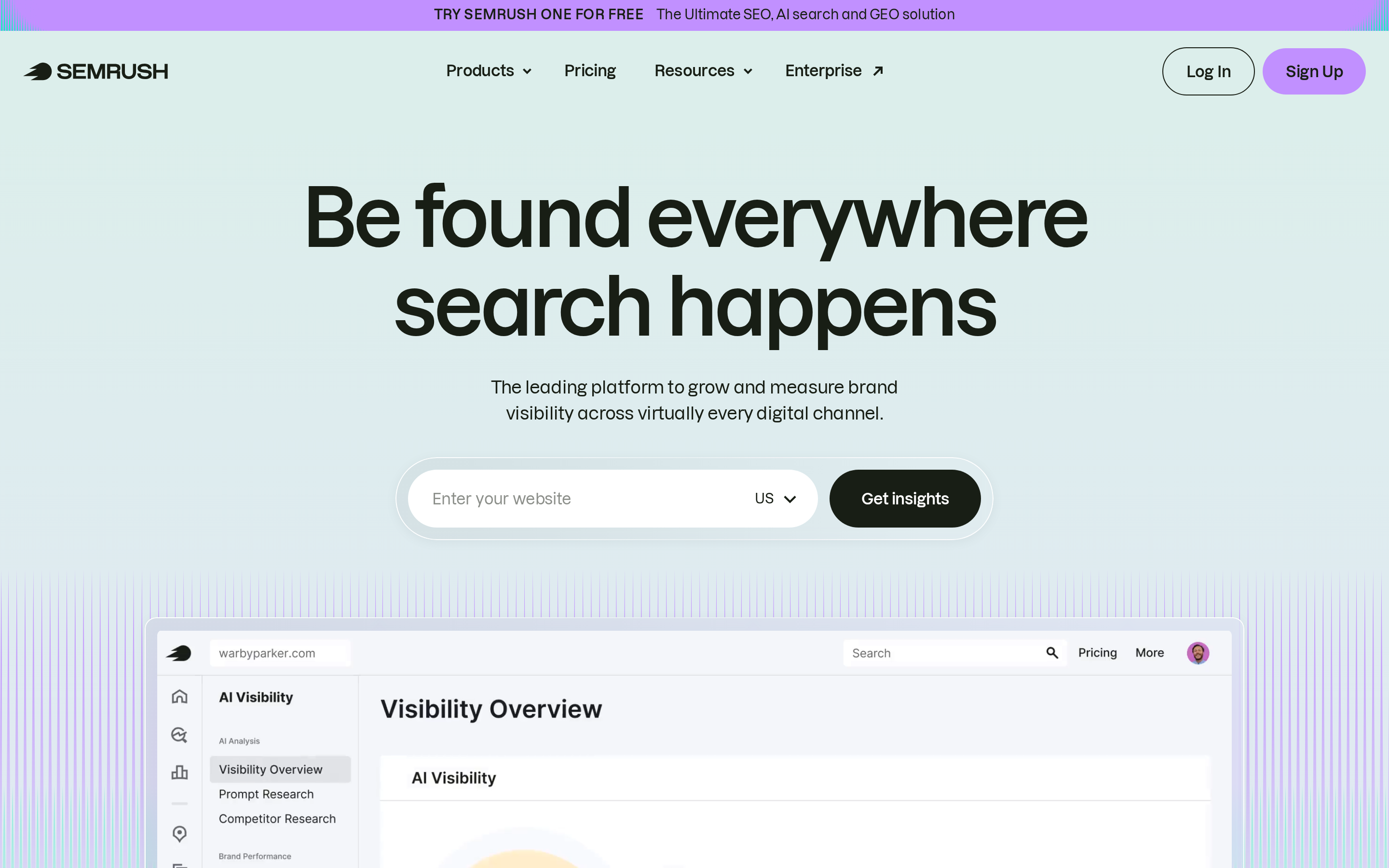
Semrush is an SEO and search intelligence platform for keyword research, competitor analysis, technical audits, content optimization, and social publishing.
Better than StoryChief when…
Semrush is stronger than StoryChief when search data, competitor intelligence, and technical SEO diagnostics matter more than editorial coordination.
Semrush adds a proprietary database of keyword, domain, and backlink data, alongside SERP analysis and site crawls.
Keyword and competitor research - search volume and difficulty, plus estimated organic and paid traffic for any domain you point it at.
Technical site audits - crawls for broken links, crawl errors, missing metadata, and slow pages, rolled up into a health score.
Backlink tracking - monitors the link profile behind rankings, yours and your competitors'.
Semrush's research and audit tools inform content before publishing. Its Social Toolkit also schedules and publishes posts, though search analysis remains its center of gravity.
Where StoryChief still wins
StoryChief is built around the editorial work that follows research. Teams can edit, comment, approve, optimize, and distribute content from one workspace.
Semrush also provides social tools and content-optimization workflows, but its center of gravity is search intelligence and diagnostics. Confirm the exact WordPress handoff your team needs rather than assuming it matches StoryChief's multi-destination publishing flow.
Pricing and fit
Semrush packages search, AI visibility, and additional toolkits separately, and its public pricing presentation can vary by selected product and billing setup. Check the current official pricing page before budgeting.
The practical cost question is whether your team will use the research and diagnostic depth. Project, tracking, user, and add-on limits can change the total, while production and implementation may still require separate tools.
Bottom line
Semrush is the stronger choice for keyword data, competitor research, backlinks, and technical diagnostics. StoryChief is the more direct fit for collaborative editorial production and multi-channel delivery.
A Semrush-led stack may still leave briefs, writing, approvals, and implementation spread across separate tools.
How to choose the right StoryChief replacement
Choose the replacement by naming the work that currently stalls:
Social review and approvals: Planable provides visual views and plan-based approval workflows. ContentStudio adds discovery, RSS automation, and engagement tools.
Campaign coordination: CoSchedule connects social schedules with campaign calendars and project views.
Search execution: RankUp carries research into writing and updates with persistent business context.
Search data and diagnostics: Semrush provides keyword, competitor, backlink, and technical SEO analysis.
Cross-team operations: Asana, monday.com, and Wrike are partial replacements. They coordinate work but do not natively replace StoryChief's content publishing.
Check the pricing basis as carefully as the headline rate. Per-user, workspace, customer, and add-on models behave differently as reviewers, clients, and channels increase.
Finally, count the manual work left after setup. A tool can automate scheduling while still leaving research, writing, CMS delivery, or implementation with your team.
What if you need more than a planning tool?
Social planners and general work-management platforms can organize finished content without producing the search strategy or article behind it.
Watch the handoffs that remain:
Research and prioritize the topic
Turn SERP coverage and search intent into a differentiated brief
Write with the product's positioning and evidence
Move the final copy into the CMS
Audit published pages and implement the changes
A more complete SEO workflow connects those stages. RankUp, for example, delivers a prioritized content plan, publish-ready articles and pages, and written content updates using the same stored business context.
That distinction matters because the calendar is only one part of getting useful SaaS content found in Google and AI-generated answers.
The StoryChief alternative built for Google and AI search visibility
RankUp does one thing: the SEO and GEO content built to get a SaaS product found in Google and named when buyers ask ChatGPT, Claude, or Perplexity for options.
That is the real difference here. StoryChief covers more content types and more channels, while RankUp goes deeper on the work behind each page:
Strategy - Magnus turns keyword research into a prioritized content plan, with clusters, search intent, and priority scores attached to every topic.
Writing - Cedric pulls the live SERP and your knowledge base into a section-level blueprint, asks only where your expertise is missing, then drafts in your voice.
Continuous improvement - Lyra watches published pages for slipping rankings and stale sections, then runs the updates across the site as your product and market move.
:quality(80) "RankUp's Content Audit view with Lyra in the sidebar, listing 230 published pages with refresh recommendations and open audit fixes")
None of that depends on StoryChief. RankUp publishes into WordPress, Webflow, Contentful, Sanity, Storyblok, Ghost, and WooCommerce with two-way sync.
Nothing resets between those stages. Your positioning, evidence, published pages, and interview answers stay loaded, so the second article starts sharper than the first.
RankUp keeps research, writing, and updates connected. Start your 7-day free trial to put your tailored plan into action through content creation and content refreshes.
Before the trial, RankUp learns your business context, analyzes your site and situation, runs a light AI-search audit, identifies topics and next actions, and proposes a custom ongoing plan. The 7-day trial follows for content creation and content refreshes.
(For SaaS and tech companies with English-language sites only.)
Frequently asked questions about StoryChief alternatives
Does StoryChief have a free plan?
Yes. StoryChief's current Free plan is a free-forever analytics plan with social, website, and SEO analytics.
Publishing, collaboration, AI credits, and editorial features sit on paid plans. StoryChief says paid plans include a no-card trial, but its current pricing page does not state a trial duration.
Is StoryChief a good platform?
Yes, for teams that want editorial collaboration and multi-channel distribution in one workspace. StoryChief is especially relevant when articles, social posts, approvals, SEO guidance, and publishing need to stay connected.
Check the exact plan allowances for users, social channels, websites, articles, and API access before deciding.
What is StoryChief used for?
StoryChief is used to plan, create, review, optimize, and distribute content from one workspace.
Its integration catalog covers CMS platforms, social networks, RSS, newsletters, and other connected tools. Eligible plans also include SEO insights and weekly content audits.
Which tools are best for editorial calendars?
The best editorial calendar depends on what happens around it. StoryChief fits article and multi-channel publishing, Planable fits visual social approvals, ContentStudio fits social discovery and automation, and CoSchedule fits campaign-led calendar management.
Asana, monday.com, and Wrike can track editorial work too, but they require separate SEO and publishing tools.
:quality(80))
Author of the article
Georg Richard Aare
Georg is the co-founder of RankUp and an SEO nerd who spends (almost) every waking minute refining his craft and sharing his learnings. When he’s not behind his computer, which is rare, you’ll find him in the gym doing bench (never legs) to clear his mind.
This article was created using: